

The Golden Equation of Ecommerce: Simple Math for Predictable, Profitable Growth
Forecast Series Part 2 (of 4)
Today’s complex ecommerce environment is challenging, to say the least, for brands who want to grow business revenue predictably.
Executive teams are having conversations about how to navigate new technology and AI to help improve customer shopping experiences so they can win against the competition. As they scrutinize all the data available across tech platforms, many are feeling the effects of data overload. With so many metrics, dashboards, and attribution models at their fingertips, it can feel confusing which metrics really matter and where they should put their focus to create real ecommerce growth.
What metrics should brands measure to predictably and profitably grow their ecommerce revenue?
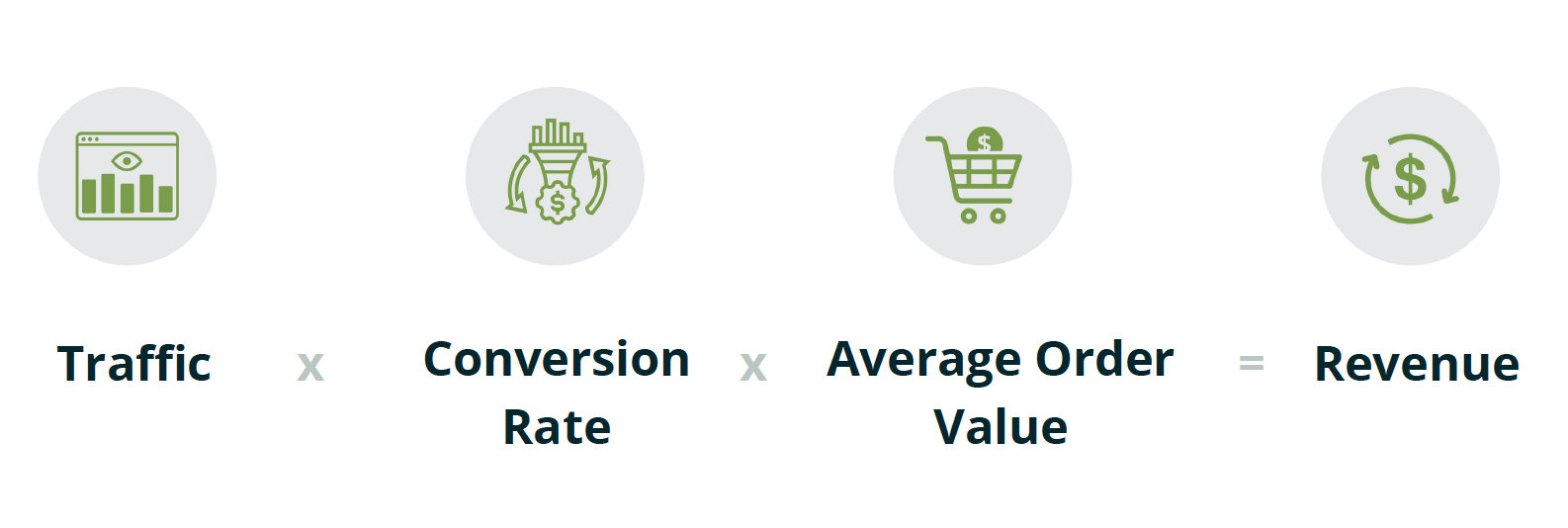
While there are thousands of metrics you could spend time and money analyzing, there is a simple formula you can use to determine where to focus effort to create predictable growth. The simple ecommerce growth formula we share below uses three metrics, which allow you to make an impact on growth without trying to boil the entire ocean all at once.
Focus on These Three Metrics to Increase Ecommerce Revenue
There are three main metrics that really move the needle when you want to increase ecommerce growth.
Lower Return Rates: Returning customers are more confident in their purchases because they already know what to expect. They’re familiar with your sizing, product quality, and shipping experience, leading to fewer returns and exchanges.
Lower Acquisition Costs: You’ve already paid the upfront cost to acquire these customers. Now, you can focus on low-cost retention channels like email, SMS, and loyalty programs to keep them engaged.
More Efficient Conversions: Returning customers require fewer touchpoints to convert. Unlike new customers, who may need to see your brand multiple times across various channels, returning customers are more likely to click on a reminder email or respond to a text about a sale.
Higher Lifetime Value: With returning customers, the work isn’t just about getting them to make another purchase—it’s about increasing their order frequency and average order value (AOV) over time.
Here’s a simple way to think about returning customer revenue:
Customer Count x Order Frequency x AOV = Returning Customer Revenue
For example:
If you have 5,000 returning customers who order twice a year and spend an average of $100 per order, your returning customer revenue would be:
5,000 x 2 x $100 = $1,000,000
New Customers: The Fuel for Future Growth
While returning customers provide stability, new customers are critical for growth. After all, no business can thrive on repeat customers alone—you need a steady flow of new shoppers to keep growing. But new customers present unique challenges:
Higher Acquisition Costs
New customers don’t know your brand yet, so they’re less likely to convert without significant persuasion. This often means relying on costly acquisition channels like social media ads, non-branded Google search terms, or influencer marketing to get their attention.
2. More Uncertainty
New customers are less familiar with your products, which can lead to higher return rates or cart abandonment. They may also require more touchpoints, like reviews or trust signals, before feeling confident enough to purchase.
The New Customer Equation
Forecasting new customer revenue requires looking at three key variables:
Customer Count x AOV x Initial Purchase Frequency = New Customer Revenue
For example:
If you need $1,000,000 in revenue from new customers and your historical data shows an AOV of $100 and a typical new customer makes 1 purchase in their first year, you’ll need:
10,000 customers x $100 x 1 = $1,000,000
Bringing It All Together: The Gap Analysis
One of the key benefits of separating your revenue forecast into new vs. returning customers is that it helps you identify how much revenue you expect from each group. Here’s how to do it:
Start with Your Total Revenue Goal
For example, let’s say your goal is $2,000,000.
Calculate Returning Customer Revenue
Using the example above, returning customers generate $1,000,000.
Subtract Returning Customer Revenue from Your Goal
$2,000,000 – $1,000,000 = $1,000,000 from new customers.
Use the New Customer Equation to Determine Your Targets
Based on an AOV of $100 and an initial purchase frequency of 1, you’ll need to acquire 10,000 new customers to hit your revenue goal.
This simple gap analysis helps you clearly define how many new customers you need to acquire, and it highlights the importance of retaining existing customers to keep the pressure off acquisition efforts.
What’s Next? Breaking Down the Channels
Once you’ve identified your revenue targets for new and returning customers, the next step is to figure out how to reach them. That’s where acquisition and retention channels come into play. In our next post, we’ll dive into the pros and cons of various channels—from Facebook and Google Search for new customers to email and SMS for returning customers—and how to forecast their impact on your revenue goals.
Want to make this process easier? Our software is designed to help ecommerce managers easily run multiple scenarios and guide merchants through how to think about new versus returning customers.
Ready to take the guesswork out of nailing your goals? Let’s talk.
