

CASE STUDIES
METHOD | RETENTION ANALYTICS
What an Unsubscribe Actually Costs
Most ecommerce teams consider unsubscribes, or unsubscribe rate, a list hygiene metric, disconnected from revenue. We joined three years of unsubscribe events to full order history across two accounts and found that when the person leaving has already bought, the unsubscribe behaves like a churn event, and it carries a price.
The Question
Unsubscribes are usually reported as a count rather than valued as a dollar figure. They appear as a rate beside open rate and click rate, and they prompt a list health conversation. That framing treats every departure as equivalent, and we wanted to test whether it is.
Working through the Tadpull Data Pond MCP connector against the Klaviyo event API, we joined every unsubscribe event to that profile's full order history and observed each one for 365 days. The two accounts are independent ecommerce businesses in the same category, identified here as Account A and Account B.
For a Customer, Leaving the List Means Leaving
Across both accounts, roughly 97 in 100 unsubscribers never place another order within a year. That headline is less useful than it looks, because most people who unsubscribe were never customers to begin with. The number worth reading is the one for people who had already bought.
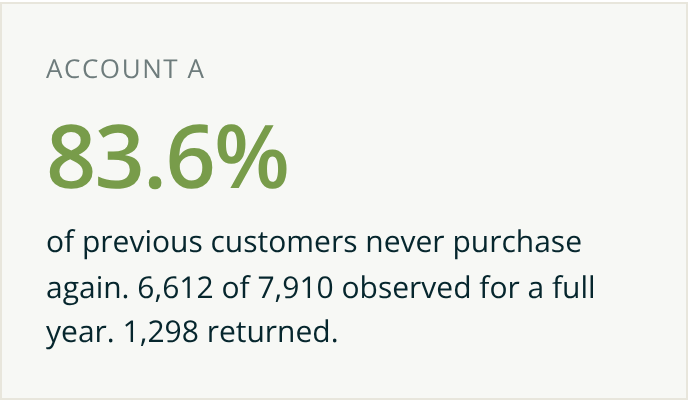
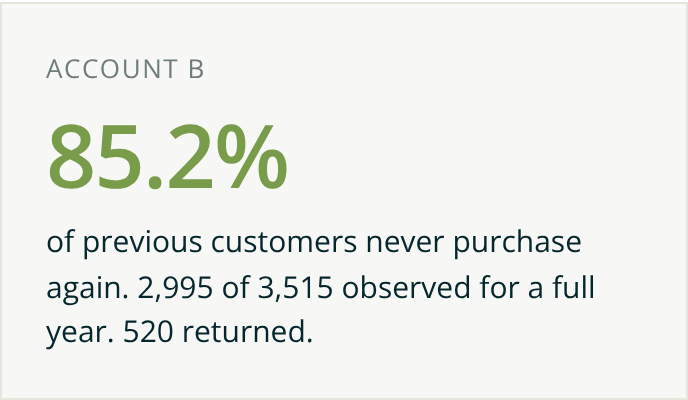
Narrowing to prior purchasers still leaves about five in six who never come back. Two independent accounts landing within two points of each other is what moves this from an interesting number to one worth building on.
The Cost Is Wildly Uneven
Departures are not interchangeable. A customer with one lifetime order is worth $263 over the following twelve months at Account A and $302 at Account B. At ten lifetime orders those figures are $2,249 and $5,583. The same event costs between eight and eighteen times more depending on who it happens to.
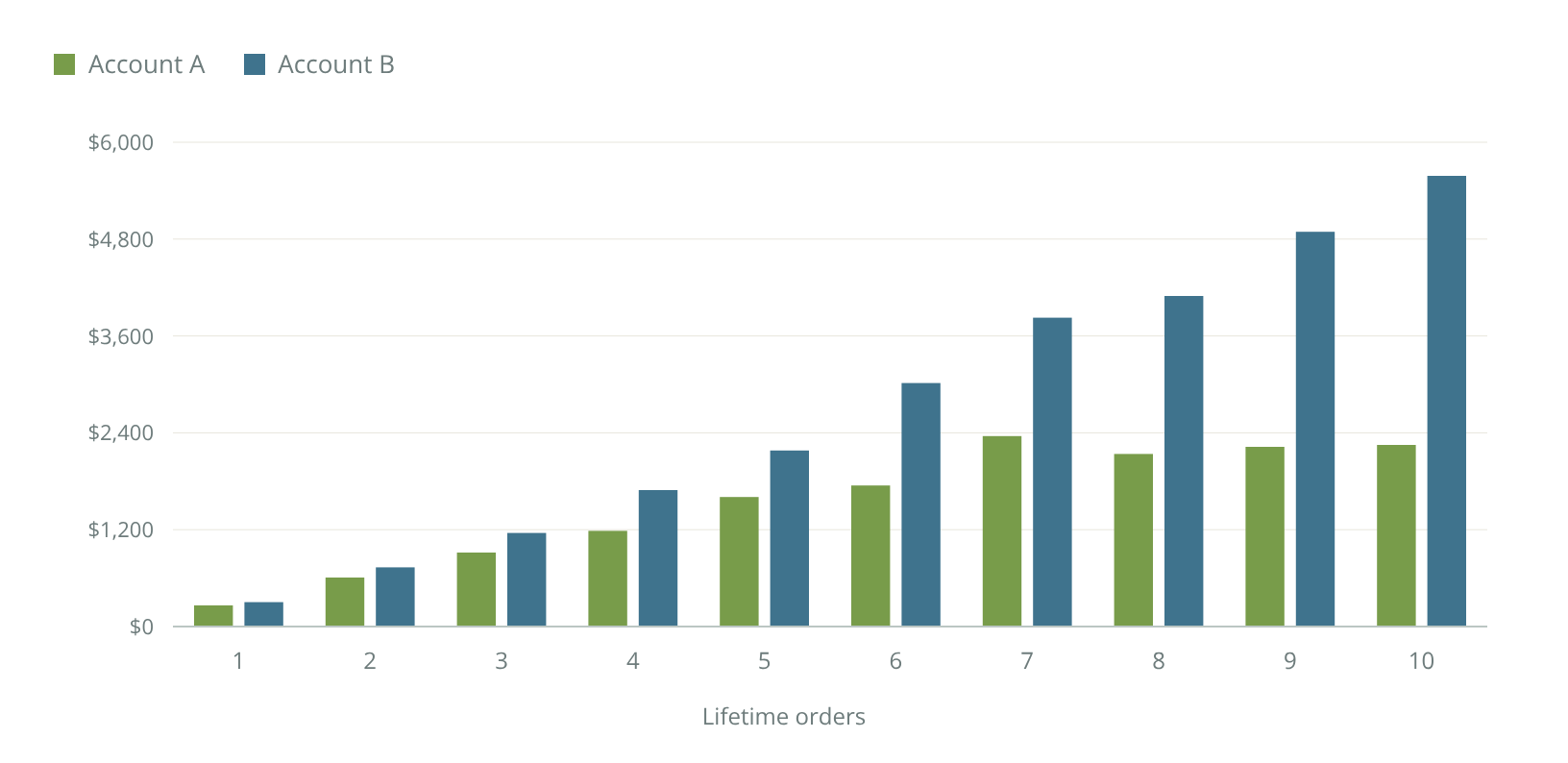
Caption: Read as: a customer who has placed N orders goes on to spend this much over the following twelve months, averaged across all active customers. Source: Klaviyo event API, n=19,088 (Account A) and n=12,434 (Account B) at one order, order history 2023-09-01 to 2026-09-16.
That spread is the whole finding. It rules out any list-wide response, and it makes identification the useful work: not reducing unsubscribes in general, but knowing which specific departures are expensive.
And It Compounds
Scaling each unsubscribing customer's forward value by the share who never return produces an annual figure. Account A carried $1.93M of forward revenue risk in 2025. Account B carried $1.18M, which has run between 0.30% and 0.70% of trailing twelve month revenue in every month since late 2024.
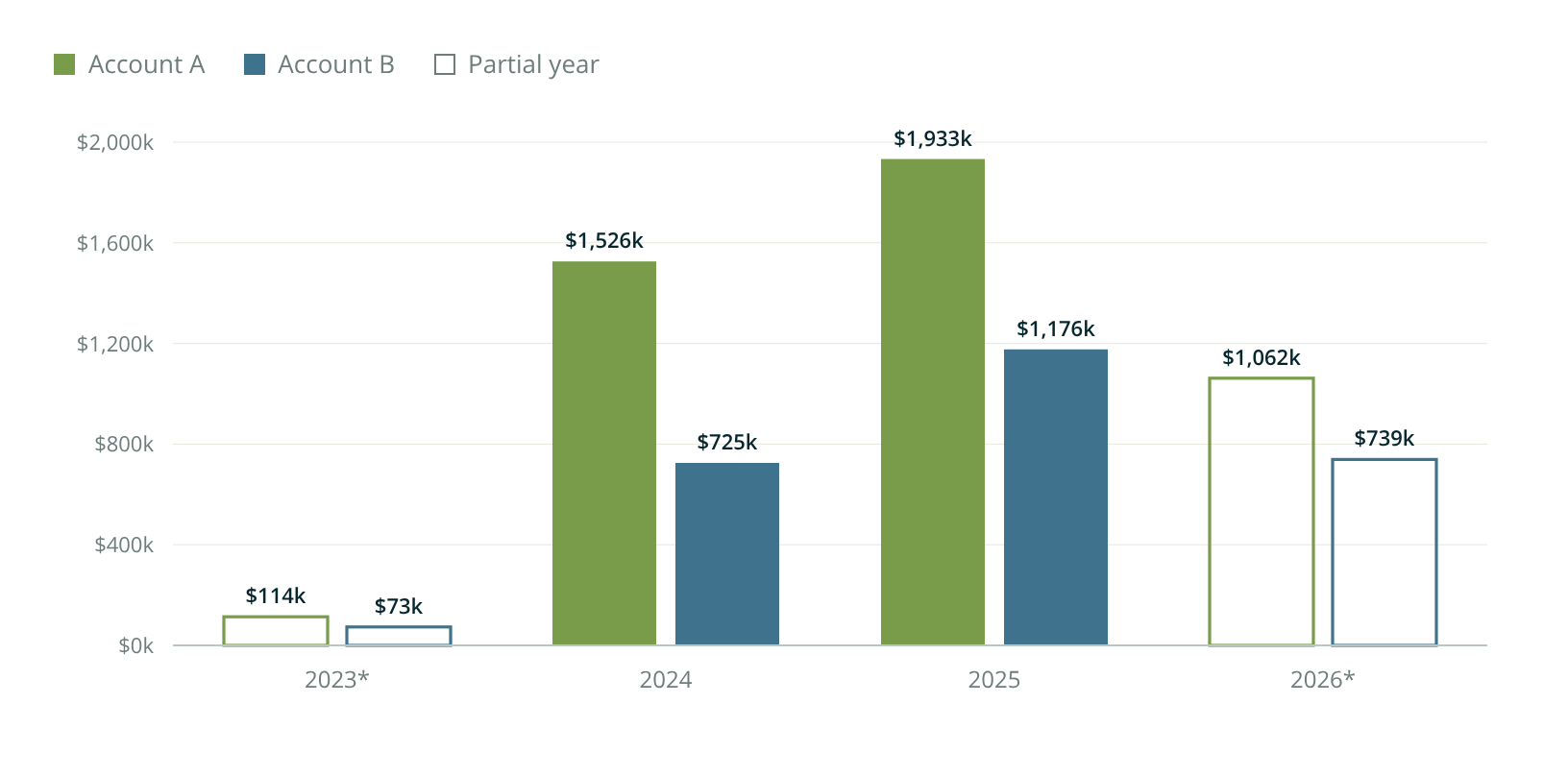
Caption: 2023 covers 3 of 12 months, 2026 covers 8 of 12. Source: Klaviyo event API, n=140,615 (Account A) and n=52,651 (Account B) unsubscribes, 2023-10 to 2026-08, data as of 2026-09-16.
Methods and Limits
Sources
Klaviyo event API, read through the Tadpull Data Pond MCP connector. Metrics used: Unsubscribed from Email Marketing, and Placed Order, both as per-profile events. Unsubscribes 2023-10 to 2026-08. Order history 2023-09-01 to 2026-09-16. Figures as of 2026-09-16.
Forward Annual Revenue Risk
The revenue an unsubscribing customer would be expected to generate over the next twelve months, scaled by the share of customers who never come back. Customers who return are removed rather than counted as a loss.
Purchaser
Someone who had placed at least one order before they unsubscribed.
Order History is a Floor
Purchase counts begin when the email platform went live, so a customer who was already buying before that date shows fewer orders than they truly have and sits in a shallower value band than they belong in. Every figure here understates.
One comparison is still outstanding. These never-return rates have not yet been measured against matched customers who stayed subscribed over the same period. That comparison is the next pull, and until it lands this analysis describes what follows an unsubscribe rather than how much of it the unsubscribe explains.
What Comes Next
This is the first post in a series on putting a dollar value on the retention signals most teams only count. Pricing unsubscribes changes which departures get attention, and the rest of the series follows that thread.
If you run an ecommerce business and want to know what your own unsubscribes are costing you, we would like to hear from you. Reach out and we will walk through what these numbers could look like for your list.