

Case Studies
Method | Retention Analytics
What an Unsubscribe Actually Costs
An unsubscribe can mean more than a smaller email list. Our analysis of two ecommerce businesses suggests that the potential revenue implications are significant, particularly when existing customers unsubscribe.
The Question
What is the potential revenue cost of an email unsubscribe?
Ecommerce teams typically monitor unsubscribe rates alongside metrics such as opens and clicks. While these metrics help measure email engagement, they tell us little about the purchasing behavior of people after they unsubscribe.
We wanted to understand what happens to future purchasing behavior after an unsubscribe and what that could mean for revenue.
How We Approached the Analysis
For this analysis, we analyzed three years of unsubscribe events from two independent ecommerce businesses in the same category, identified here as Account A and Account B. We isolated email subscriptions only and did not account for SMS.
Using the Tadpull Data Pond MCP connector and Klaviyo’s event API, we linked unsubscribe events to individual order histories and projected purchasing activity for each unsubscribe.
An important distinction in the analysis was whether someone had previously made a purchase. We separated the audience into two groups:
- Existing customers: Subscribers who had made at least one purchase before unsubscribing.
- Prospects: Subscribers who had never made a purchase.
For existing customers, we examined whether they made another purchase in the following 365 days. For prospects, we examined whether they made their first purchase in the same window. We set the post-unsubscribe monitoring period using each business’ repeat purchase cycles. Top customers order nearly every 60 days, while the average repeat customer may only order once per year so we felt 365 days captures meaningful signals. The window of analysis should adapt to each business’s typical purchase cycle.
We also looked at how previous purchase history relates to expected future customer revenue, allowing us to assess the potential financial implications of different tiers of unsubscribes.
What We Found
1. The Large Majority of People Who Unsubscribe Do Not Make a Purchase in the Following Year
Across both businesses, approximately 97% of people who unsubscribed placed no orders during the following 365 days.
That figure is striking, but it needs context.
Most people who unsubscribed were prospects who had never purchased. Combining prospects and existing customers into a single unsubscribe rate obscures an important distinction: a prospect who never converts represents a different revenue opportunity than an existing customer who may have purchased again.
To better understand the implications for repeat purchasing, we subset existing customers who unsubscribed apart from the prospects.
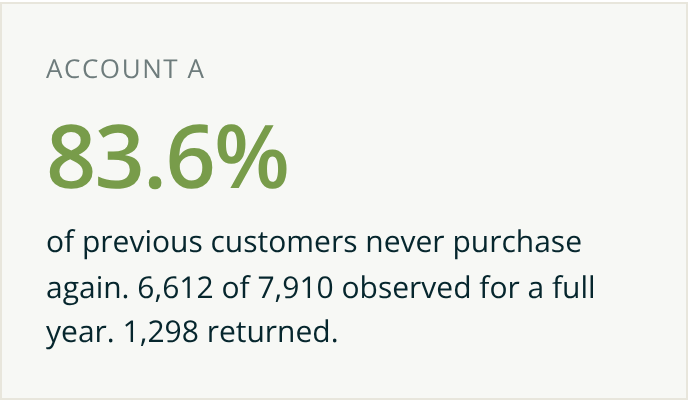
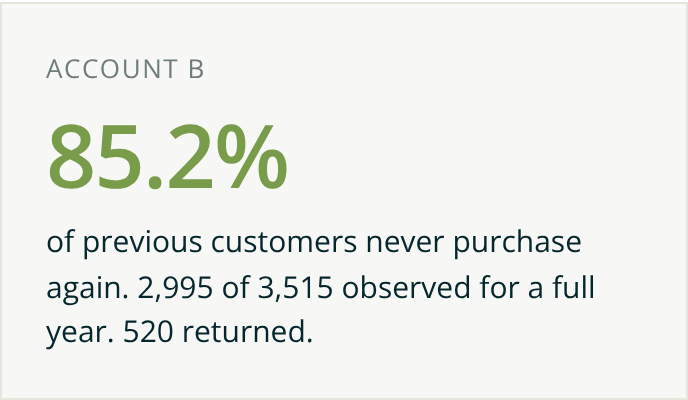
In both businesses, approximately five in six existing customers who unsubscribed did not make another purchase in the following year.
The consistency across the two accounts is notable. However, this does not necessarily mean that unsubscribing caused those customers to stop purchasing. Some may not have returned regardless of their email subscription status.
Understanding the potential revenue implications requires looking beyond whether customers return to how much future revenue they typically generate.
2. The Potential Revenue Impact Varies Considerably by Customer Purchase History
Not all unsubscribes represent the same financial exposure.
Customers with more previous purchases tend to generate substantially more revenue over the following year. To understand the magnitude of that difference, we examined forward revenue across active customers, grouped by their historical number of purchases.
For customers with one recorded lifetime order, average revenue over the following twelve months was $263 at Account A and $302 at Account B.
For customers with ten recorded lifetime orders, those figures increased to $2,249 and $5,583, respectively.
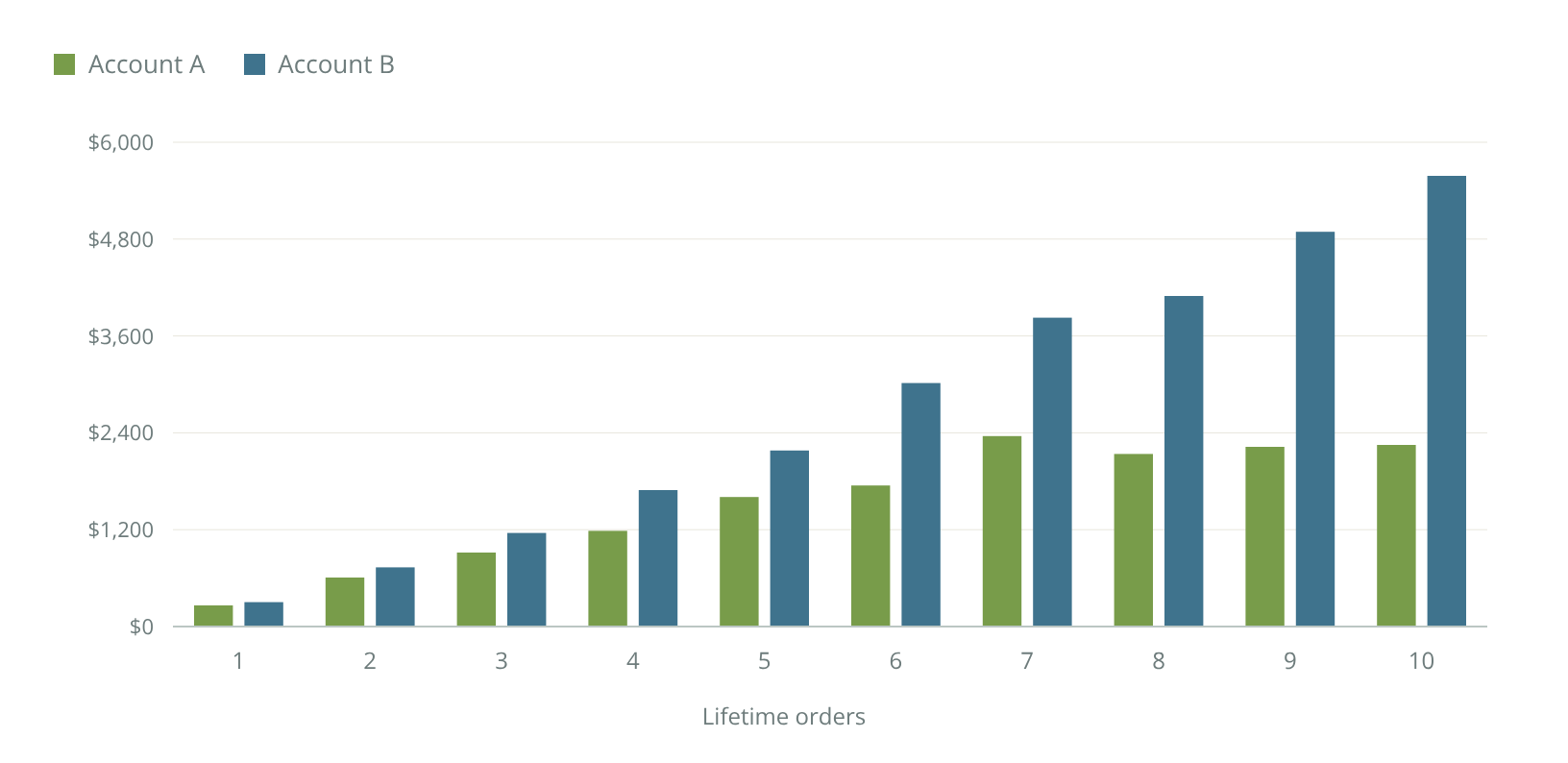
This difference matters when considering the potential financial impact of an unsubscribe. An existing customer with ten previous purchases represents substantially more future revenue potential than someone who has purchased only once. While an unsubscribe does not necessarily mean that future revenue will be lost, understanding who is unsubscribing provides a more meaningful view of the revenue at risk.
This suggests that evaluating unsubscribes solely as a list-wide count or rate misses an important dimension of customer value.
3. The Cumulative Revenue Exposure Is Meaningful
We also wanted to understand what this pattern could mean at the business level.
To estimate annual forward revenue risk, we combined the number of existing customers unsubscribing with their expected revenue over the following twelve months, weighted by the proportion who did not return to purchase.
This provides an estimate of potential future revenue exposure associated with unsubscribing customers who do not purchase again. It is not a measurement of revenue directly lost because they unsubscribed.
The resulting figures were substantial:
- Account A: $1.93 million in estimated forward revenue risk associated with customers who unsubscribed in 2025.
- Account B: $1.18 million in estimated forward revenue risk associated with customers who unsubscribed in 2025.
For Account B since late 2024, the forward revenue risk estimate ranged from 3.6% to 15.4% of trailing twelve-month revenue depending on the month it was calculated.
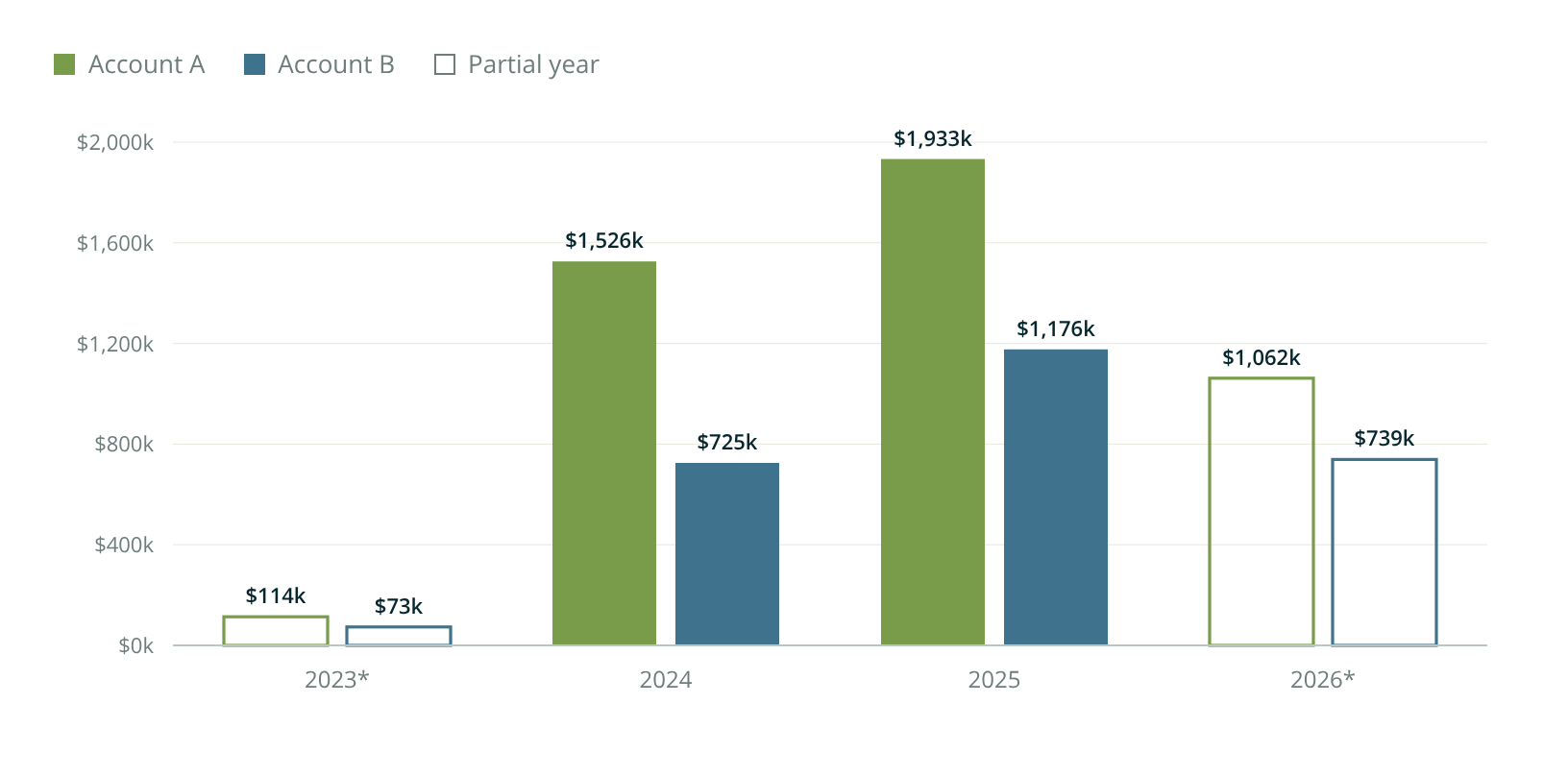
These figures provide a different perspective on unsubscribe reporting.
Rather than treating every unsubscribe as equivalent, businesses can begin to understand how the composition of unsubscribing customers relates to potential future revenue.
This also changes the questions worth asking. How many existing customers are unsubscribing? How does their purchasing history compare with that of the broader customer base? And are customers with greater future revenue potential disproportionately represented among those unsubscribing?
What This Means for Ecommerce Teams
The findings suggest that unsubscribe rates alone provide an incomplete picture.
Two businesses could have identical unsubscribe rates but very different levels of potential revenue exposure, depending on the purchasing history of the customers who unsubscribe.
Similarly, within a single business, an increase in unsubscribes among prospects may have different implications than an increase among established repeat customers.
This creates an opportunity to make unsubscribe reporting more useful by connecting it to customer purchase history and expected future value.
It also raises questions about how businesses approach email frequency, segmentation, and customer retention. Understanding which customers are unsubscribing, rather than simply how many, can help inform those decisions.
The next analytical step is equally important: comparing the purchasing behavior of customers who unsubscribed with similar customers who remained subscribed.
That comparison will help determine whether unsubscribing is associated with a meaningful difference in subsequent purchasing behavior, beyond the patterns that would be expected from customers with similar histories.
For now, the finding is clear: unsubscribes are not all associated with the same level of future revenue risk, and treating them as interchangeable can obscure meaningful differences in customer value.
Methodology and Limitations
Data Sources and Period
We used Klaviyo’s event API to analyze the Unsubscribed from Email Marketing and Placed Order events at the customer-profile level.
The Tadpull Data Pond MCP connector allowed for incorporation of deeper customer histories beyond what Klaviyo saw. This was our source for forward-value calculations per order history cohort.
The analysis covers unsubscribe events from October 2023 through August 2026 and order history from September 1, 2023, through September 16, 2026. But also incorporates customer cumulative order counts that predate 2023.
Forward Revenue Risk
Forward revenue risk estimates the potential twelve-month revenue associated with customers who unsubscribe and do not return to purchase. It combines expected future customer revenue with observed non-return rates. Customers who make another purchase are excluded from the estimated risk rather than treated as lost customers.
This is an estimate of revenue exposure, not a causal estimate of revenue lost because of unsubscribing.
Historical Purchase Counts
Klaviyo purchase counts reflect the order history available in the email platform. Customers who purchased before that history began may have more lifetime orders than the data captures. As a result, some customers may be assigned to lower historical purchase-count groups than their complete purchase history would indicate. This is why we utilized the Tadpull Data Pond as the source of truth for customer and order as it’s history matches that of the client’s ERP.
What Comes Next
This is the first post in a series on putting a dollar value on the retention signals most teams only count. Pricing unsubscribes changes which departures get attention, and the rest of the series follows that thread.
If you run an ecommerce business and want to know what your own unsubscribes are costing you, we would like to hear from you. Reach out and we will walk through what these numbers could look like for your list.
TALK TO TADPULL